
What Is a Personal Budget? (Beginner’s Guide + Example)
What Is a Personal Budget?
What is a personal budget? In simple words, a personal budget is a plan for your money. It helps you understand how much money you earn, how much you spend, and how much you save every month. When you have a personal budget, you stop guessing about your money and start controlling it.
Many people avoid budgeting because they think it is complicated or boring. But the truth is, a personal budget is just a clear picture of your money. Once you see that picture, your financial life becomes much easier.
Why a Personal Budget Is Important
Most people don’t run out of money because they earn less. They run out of money because they don’t know where it goes. This is exactly where a personal budget helps.
When you make a personal budget planner, you start noticing things like:
How much you spend on food delivery
How much money goes into online shopping
How much you spend on things you don’t even remember buying
A personal budget is important because it:
- Helps you see your spending clearly
- Helps you save money
- Helps you avoid overspending
- Helps reduce money stress
- Helps you feel more in control
It is not about restricting your life. It is about understanding your money.
What Is Included in a Personal Budget?
A personal budget is actually very simple. It has only three main parts:
- Income – The money you earn
- Expenses – The money you spend
- Savings – The money you keep for the future
Every personal budget example you see will always have these three parts. Once you understand this, budgeting becomes much less confusing.
A simple personal budget planner can be made in a notebook, Excel sheet, or even on paper. You don’t need any complicated app to start.
Personal Budget Example (Simple and Realistic)
Let’s look at a very simple personal budget example so you understand how it works.
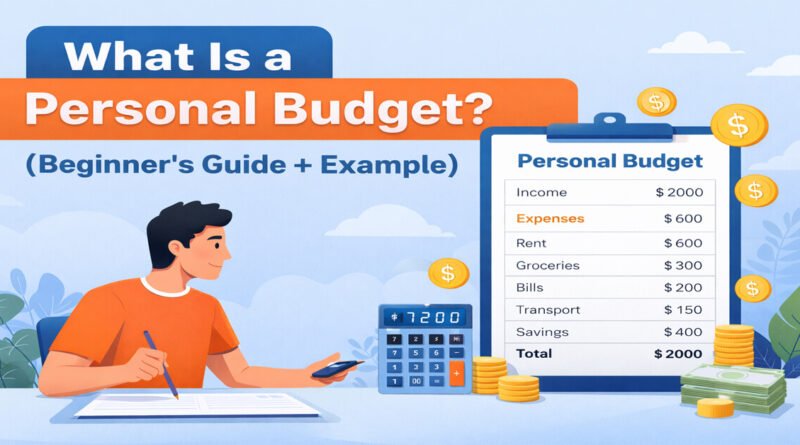
Imagine someone earns $2000 per month. Their budget may look like this:
Category | Amount |
Income | $2000 |
Rent | $600 |
Groceries | $300 |
Bills | $200 |
Transport | $150 |
Shopping | $150 |
Savings | $400 |
Total | $2000 |
This is a basic personal budget example, but it clearly shows one important thing — every dollar has a place to go. That is the main idea behind a personal budget.
How to Create a Personal Budget
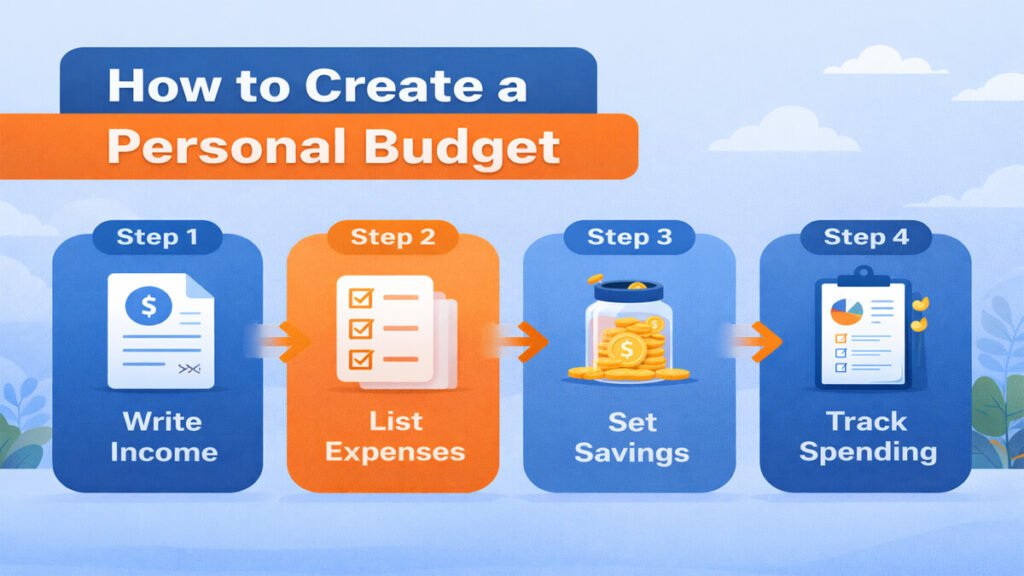
If you are wondering how to create a personal budget, don’t overcomplicate it. Just follow these simple steps.
Step 1 – Write your total income
Write how much money you earn in a month.
Step 2 – Write your fixed expenses
Rent, bills, EMI, school fees — expenses that don’t change much.
Step 3 – Write your variable expenses
Food, shopping, travel, entertainment.
Step 4 – Decide your savings
Always save first, not last. Even 10% is a good start.
Step 5 – Track your spending
For one month, write down every expense. This step alone can change your financial life.
If you already have a step-by-step monthly budget guide, then creating a personal budget becomes even easier because you just need to follow a structure. If you want to understand the monthly budgeting process explained in a very simple way, you can read this detailed guide.
Personal Budget vs Monthly Budget
People often think these are the same thing, but there is a small difference.
A personal budget is your overall money plan.
A monthly budget is your plan for one month.
So when you understand what is a personal budget, you are basically learning how to manage your money in general, not just for one month.
Common Mistakes People Make
Many people create a personal budget planner, but still fail. Why? Because of some very common mistakes:
- They forget small daily expenses
- They make a budget but don’t follow it
- They don’t track spending
- They make an unrealistic budget
- They give up after one month
Budgeting is not something that works perfectly in one month. It is a habit, and habits take time to build. Many beginners repeat the same mistakes that ruin a budget, so it is important to learn what to avoid before you start.
How a Personal Budget Changes Your Money Habits
The biggest benefit of a personal budget is not just saving money. The biggest benefit is awareness.
When you see a personal budget example, you suddenly realize:
“I am spending too much on food.”
“I am shopping too much.”
“I am not saving enough.”
This awareness alone starts changing your behavior. You don’t need to force yourself too much. You automatically start making better decisions because now you can see your money clearly.
That is why a personal budget is powerful. It changes your habits slowly. If you have ever wondered why discounts make people spend more even when they don’t need the product, the psychology behind it is very interesting.
Conclusion
So, what is a personal budget? It is simply a plan that tells your money where to go instead of wondering where it went. It is one of the simplest habits that can improve your financial life.
You don’t need to be an expert to make a personal budget. You just need to start. Use a simple personal budget planner, follow a basic personal budget example, and track your expenses for one month. That’s it.
Once you start using a personal budget, you will feel more in control, less stressed, and more confident about your money.
FAQs
How to make a personal budget?
To make a personal budget, first write your monthly income. Then list all your expenses like rent, groceries, bills, and transport. After that, decide how much money you want to save. Finally, track your expenses and adjust your budget every month. A simple personal budget planner can help you manage everything in one place.
What is a personal budget example?
A personal budget example is a simple plan that shows your income, expenses, and savings. For example, if you earn $2000, you may spend money on rent, food, bills, transport, and save some amount every month. This type of personal budget example helps you understand where your money is going and how much you are saving.

Rajat Sharma writes about human behaviour, money habits, and the quiet patterns that shape everyday decisions. Through simple, reflective writing, he explores why we think the way we do — from emotional spending to productivity and personal growth. His goal is not to give rigid advice, but to help readers notice the subtle habits that influence their lives.