
Money Anxiety: Meaning, Symptoms, Causes & How to Overcome It
Money Anxiety: Meaning, Symptoms, Causes & How to Overcome It
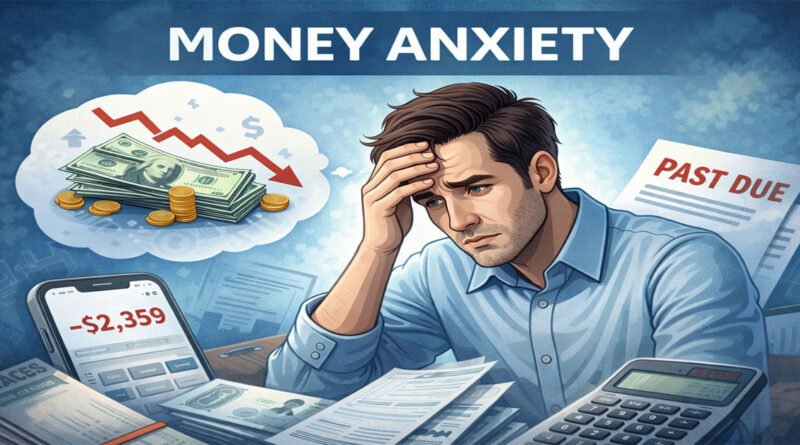
Money anxiety is the weight in your chest when you think about money, bills, savings, debt, or the future. Money anxiety is more than stress. Money anxiety is more than being frugal. Money anxiety is an emotional reaction to financial circumstances, even when there is no apparent crisis. Many people are looking for money anxiety meaning, money anxiety symptoms, and how to overcome money anxiety because it is such a confusing experience. Yet this form of financial anxiety is more common than most admit.
You can earn well and still feel it.
You can have savings and still fear loss.
You can be financially stable and still not feel safe.
That is because anxiety is psychological before it is practical.
Money Anxiety Meaning
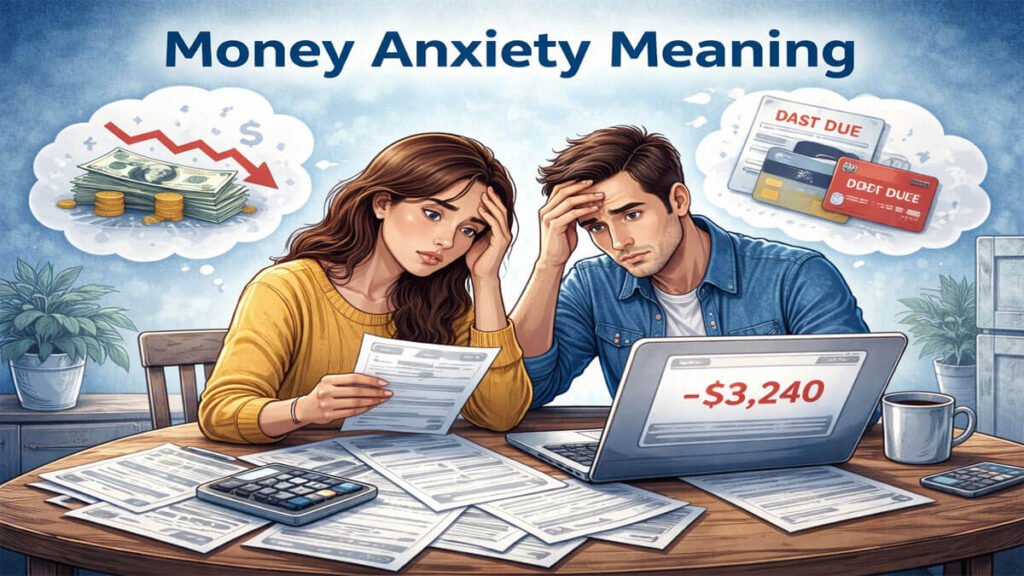
Money anxiety refers to ongoing worry, fear, or emotional tension related to finances. It is not limited to people who are struggling financially. It can affect students, professionals, business owners, and even high earners.
The key difference between normal financial concern and money anxiety is intensity.
Healthy concern says:
“I need to plan better.”
Money anxiety says:
“Something bad is going to happen.”
It often feels like a threat response. Your body reacts as if survival is at risk — even if the numbers don’t support that fear.
Money becomes emotionally charged.
Money Anxiety Symptoms
Money anxiety symptoms are not always obvious. They can be subtle and repetitive.
Common signs include:
• Avoiding checking your bank balance
• Feeling panic before paying bills
• Overthinking every purchase
• Guilt after spending money
• Constant fear of future financial disaster
• Trouble sleeping because of money thoughts
• Irritability when money is discussed
Some people cope by overspending.
Some cope by extreme saving.
Some cope by avoiding money completely. Some people even develop patterns of money avoidance to escape financial stress.
The pattern matters more than the behavior itself.
If money consistently triggers stress in your body, you may be dealing with more than budgeting issues.

Why Money Anxiety Happens
Money anxiety rarely starts with money alone. It usually has emotional roots.
1. Childhood Financial Environment
If you came from a family where money was a source of conflict, stress, or lack, your nervous system may still be wired to think money is a source of danger.
Even if you are in a safe financial environment, your body may not feel like it.
Financial identity is formed by early experiences.
2. Economic Uncertainty
Layoffs, inflation, stock market crashes, and exposure to news coverage contribute to a stressful environment. As uncertainty escalates, so does financial stress.
Your brain is trying to prepare for the worst.
Preparation morphs into obsession.
3. Social Comparison
Social media platforms are always showcasing lifestyles, accomplishments, and financial success. When you compare your financial journey with others, you may experience internal stress.
You may feel behind.
Or inadequate.
Or unsafe.
Comparison fuels anxiety quietly.
4. Lack of Control
Money represents control over security, freedom, and choices. When income feels unstable or expenses feel unpredictable, anxiety increases.
Humans fear unpredictability more than difficulty.
Money uncertainty triggers survival instincts.
The Difference Between Money Anxiety and Financial Problems
This is important.
You can have financial problems without anxiety.
And you can have money anxiety without serious financial problems.
The difference lies in emotional intensity.
If your reaction is bigger than the situation, it is likely psychological.
Understanding this removes shame.
It shifts the focus from “I am bad with money” to “I am reacting to fear.”
That awareness alone reduces pressure.
How Money Anxiety Affects Decision-Making
An anxious mind does not make clear decisions.
Money anxiety can cause:
• Impulsive purchases to reduce stress, which can develop into compulsive spending over time. This is often a form of emotional spending, where money becomes a coping tool.
• Avoidance of important financial planning
• Over-saving without enjoying life
• Refusing investments due to fear
• Staying in safe but limiting jobs
• Anxiety narrows thinking.
When the mind feels threatened, it focuses only on short-term safety.
Long-term growth disappears from view.
How to Overcome Money Anxiety
If you are searching for how to overcome money anxiety, the solution is not just financial advice. It requires emotional work too.
1. Increase Financial Clarity
Uncertainty increases fear.
List your income, expenses, savings, and obligations clearly. Numbers reduce imagination-based fear.
Many anxieties shrink once seen in reality.
Clarity creates stability.
2. Create Small Financial Structure
You do not need a perfect budget.
Start small:
One savings goal
One expense tracker
One repayment plan
Structure gives the brain a sense of control.
Control reduces anxiety.
3. Limit Financial Doom Consumption
Constantly reading negative economic news keeps your nervous system alert.
Stay informed, but not overloaded.
Awareness should empower you — not exhaust you.
4. Separate Self-Worth from Net Worth
Money anxiety often hides self-worth issues.
You are not your income.
You are not your savings.
You are not your financial mistakes.
When identity attaches to numbers, anxiety grows.
Detach identity from money, and emotional intensity reduces.
5. Regulate the Nervous System
Because money anxiety lives in the body, calming the body helps calm financial stress.
Simple practices:
• Slow breathing
• Walking without phone distraction
• Journaling fears clearly
• Awareness of thoughts
When the body feels safe, financial decisions become clearer.

When Money Anxiety Becomes Severe
If anxiety causes panic attacks, insomnia, relationship problems, or decision paralysis, professional help may be necessary.
Financial anxiety is not weakness.
It is a stress response.
Support is strength, not failure.
Long-Term Healing from Money Anxiety
True healing does not come from earning more alone.
Many high-income individuals still experience money anxiety.
Healing comes from:
• Understanding emotional roots
• Building gradual financial confidence
• Creating consistent habits and breaking old bad money habits that reinforce fear
• Practicing emotional regulation
Money becomes neutral again.
And neutrality is freedom.
Final Thoughts on Money Anxiety
Money anxiety is not about numbers alone. It is about safety, identity, and control. When finances trigger fear repeatedly, it signals an emotional pattern that needs attention — not self-criticism.
The goal is not to eliminate concern completely. Healthy financial awareness is useful.
The goal is to reduce unnecessary fear.
With awareness, structure, and emotional balance, money stops feeling like a threat.
And starts feeling like a tool.
FAQs
How do you deal with money anxiety?
Dealing with money anxiety begins with recognizing what exactly is behind the fear. It could be unclear figures, it could be past experiences. Take a seat, examine your finances rationally, and make a tiny, doable plan. If the anxiety becomes too much or persists, talking to a therapist or a financial advisor can assist you in disentangling the emotional part of money-related anxiety.
What is money anxiety?
Money anxiety is usually a result of uncertainty, personal experience with money stress, or the fear of losing control. Having a tumultuous financial background as a child can make money feel insecure even as an adult. Money stress, debt, comparisons with others, and negative news coverage can also be factors. It’s not always about the money; it’s about feeling sec

Rajat Sharma writes about human behaviour, money habits, and the quiet patterns that shape everyday decisions. Through simple, reflective writing, he explores why we think the way we do — from emotional spending to productivity and personal growth. His goal is not to give rigid advice, but to help readers notice the subtle habits that influence their lives.