
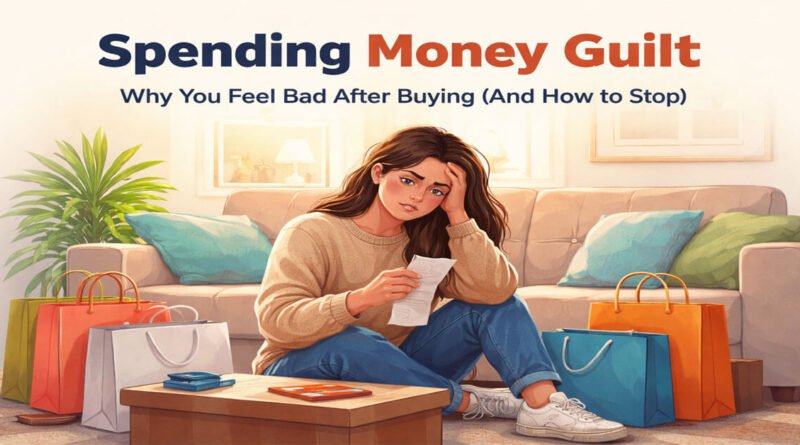
Spending Money Guilt: Why You Feel Bad After Buying (And How to Stop)
Why You Feel Spending Money Guilt (Even When You Can Afford It)
Have you ever bought something that you really, really wanted to buy but felt bad just after making the purchase? This weird feeling of “spending money guilt” is more common than you may think. But there’s just something in your mind that makes a simple transaction become a moment of regret and/or nervousness, even though you know that you have the means to spend your money on whatever it is that you need or want.
You are not alone in your quiet struggle with guilt about spending your own money, whether it’s something that you really need or deserve to have. This often connects to deeper emotional spending patterns that influence how we use money. But the question remains… why does this happen?
Why Do I Feel Guilty Spending Money?
This is one of the most common questions that people ask themselves: why do I feel guilty spending money, even though I have earned it?
The reason why people feel this way is not financial-related; it’s more psychological-related.
The answer isn’t financial—it’s psychological.
From a young age, most of us are conditioned to see money as something scarce, serious, or even stressful. Spending it, especially on ourselves, can feel like doing something “wrong,” even if there’s no real danger.
Your brain isn’t reacting to the money.
It’s reacting to what money represents—security, control, and survival.

Spending Money Guilt Psychology: What’s Really Happening
To understand spending money guilt, you need to look at how your mind works.
1. You Were Taught That Spending Is Bad
If you grew up hearing things like:
“Don’t waste money”
“Money doesn’t grow on trees”
“Save everything for the future”
Then your brain may have formed a deep belief that spending equals irresponsibility.
So even when you spend wisely, your mind reacts with guilt. Over time, this can develop into unhealthy money habits that affect your decisions.
2. You Associate Money With Fear
Money is directly tied to survival—food, shelter, safety.
Because of this, your brain naturally becomes protective about it. Spending can feel like losing control, even when there’s no actual risk.
This is why spending money guilt psychology often overlaps with anxiety. This is closely related to money anxiety symptoms that make spending feel stressful even when it’s safe.
3. You Feel You Don’t Deserve It
Sometimes the guilt isn’t about money at all—it’s about self-worth.
You might think:
“I shouldn’t spend this on myself”
“Others need it more”
“I don’t deserve this”
This creates an internal conflict between desire and guilt.
4. You Regret Decisions After Buying
Have you ever felt fine while buying something… but uneasy later?
That’s your brain switching from emotional mode to logical mode.
Before buying → “I want this”
After buying → “Was this necessary?”
This shift often triggers guilt. In some cases, this pattern can turn into compulsive spending behavior where buying becomes automatic.
5. You Compare Yourself With Others
Seeing others struggle financially can make you feel like your spending is unfair or excessive—even when it’s not.
This silent comparison fuels guilt.

Signs You’re Experiencing Spending Money Guilt
You may not always notice it directly, but here are some subtle signs:
- You overthink purchases—even small ones
- You feel bad after buying things for yourself
- You avoid spending, even when needed
- You justify every purchase to yourself
- You feel guilty about spending money on yourself
If this sounds familiar, you’re not being “careful”—you’re experiencing emotional conflict around money. For many people, this can even turn into a deeper fear of spending money over time.
Feeling Guilty About Spending Money on Yourself
This is one of the deepest forms of money guilt.
Spending on others feels okay.
Spending on yourself feels wrong.
Why?
Because many people are conditioned to associate self-spending with selfishness.
But here’s the truth:
Taking care of yourself is not selfish—it’s necessary.
If you constantly deny yourself small comforts or joys, your relationship with money becomes restrictive and stressful.
What Happens If This Continues
If spending money guilt isn’t addressed, it can lead to:
- Chronic stress around finances
- Lack of enjoyment, even after earning well
- Over-saving and under-living
- Emotional burnout
- Poor decision-making – either over-saving or over-spending
It’s ironic that guilt may lead you to do the exact things you are trying to prevent.
How to Stop Feeling Guilty About Spending Money
And here is the important part – how to do it.
1. Recognize That Guilt Is Learned
Your feelings are not facts.
Spending money guilt is a learned response—not a truth.
Once you see that, you begin to separate emotion from reality.
2. Ask: “Is This Within My Means?”
Instead of asking:
“Should I feel bad about this?”
Ask:
“Can I afford this comfortably?”
If the answer is yes, there’s no logical reason for guilt.
3. Pause Before You Buy
Sometimes guilt comes from impulsive decisions.
Use simple techniques like the 72-hour rule for spending to avoid impulsive decisions.
Waiting 24–72 hours
Revisiting the decision later
This reduces regret and builds confidence in your choices.
4. Define What Matters to You
Not every expense is equal.
Spending feels better when it aligns with your values.
For example:
Travel might matter to you
Or learning
Or comfort
When spending matches your priorities, guilt reduces naturally.
5. Accept That Money Is Meant to Be Used
Saving is important.
But so is living.
Money is not just for security—it’s also for experience, growth, and well-being.
If you only save and never allow yourself to use it, money becomes a source of pressure instead of support.

Final Thought
Spending money guilt doesn’t mean you’re bad with money—it means you’ve developed a complicated relationship with it.
The goal isn’t to stop caring about money.
The goal is to stop fearing it.
When you understand the psychology behind your behavior, something shifts.
You stop reacting… and start choosing.
And that’s where real financial peace begins.
FAQs
Is it normal to feel guilty after spending money?
Yes, it is perfectly normal to feel guilty about spending money.
Many people feel spending money guilt, especially if they were raised with the idea that money must always be saved or spent wisely. This is because, for many people, money is equated with security, and spending money, even if it is within one’s budget, can make one feel as though they are losing something.
In most cases, the spending money guilt is not about the spending, but about one’s attitude towards money. The key is to understand whether your spending was within your means. If it was, the guilt is emotional, not logical—and it can be changed over time.

Rajat Sharma writes about human behaviour, money habits, and the quiet patterns that shape everyday decisions. Through simple, reflective writing, he explores why we think the way we do — from emotional spending to productivity and personal growth. His goal is not to give rigid advice, but to help readers notice the subtle habits that influence their lives.